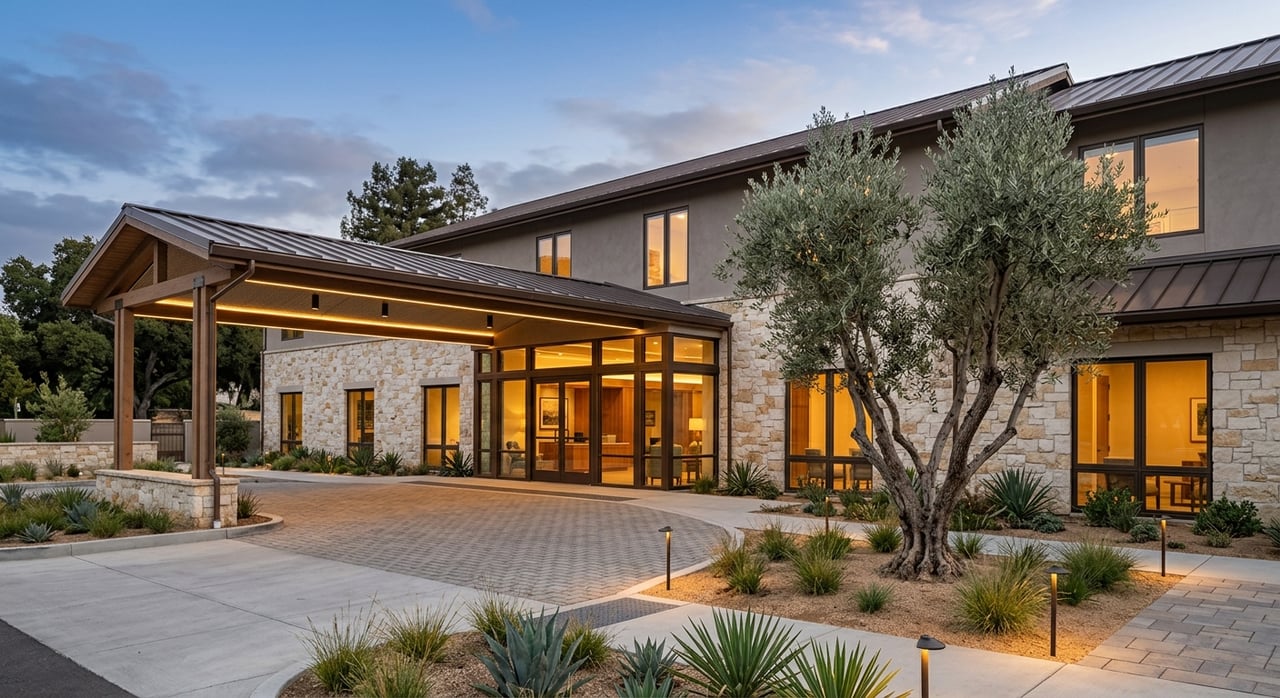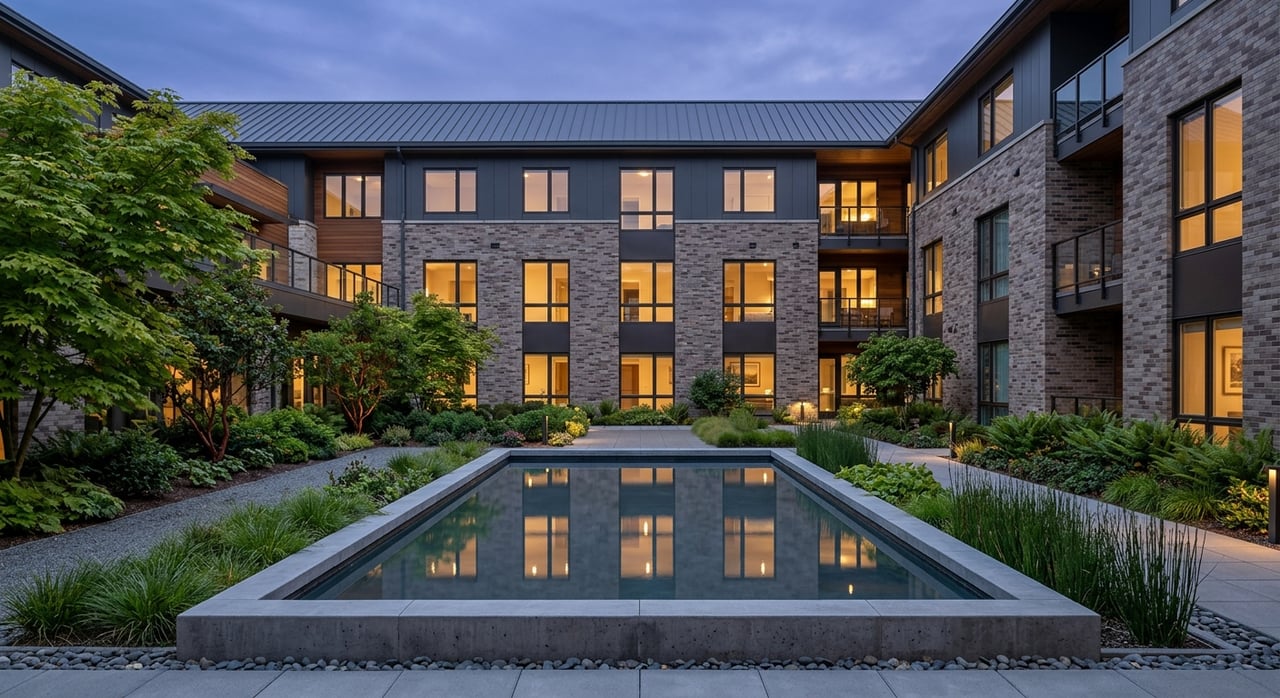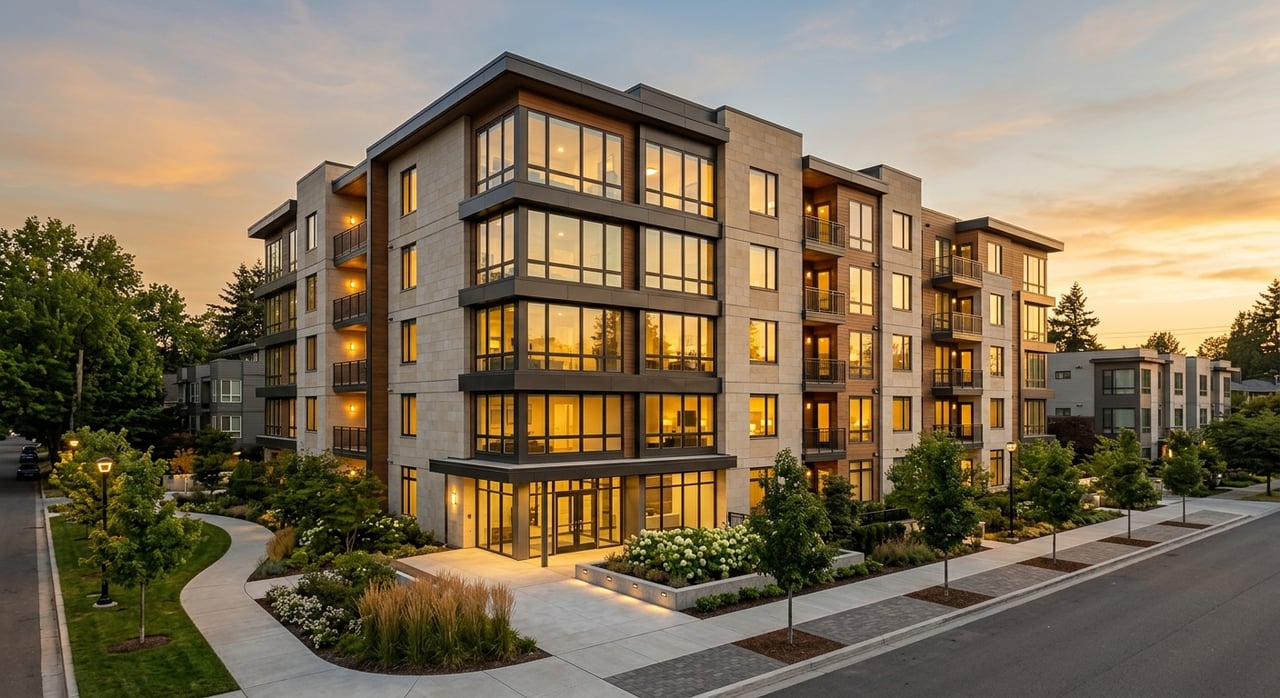
If you are evaluating senior living real estate in Portland, one question matters early: does the asset fit the city, or does it fit the suburbs better? Portland’s metro area does not behave like one single market. Demographics, income, household patterns, transit access, and development conditions vary meaningfully from Portland proper to nearby suburban nodes. This guide breaks down what those differences can mean for asset positioning, demand drivers, and transaction strategy so you can assess Portland senior living opportunities with more clarity. Let’s dive in.
Portland Is a Market of Submarkets
Portland senior living is best viewed as a collection of submarkets, not a uniform metro. Portland city has a 65+ population share of 14.5%, while Multnomah County is 15.4%, Washington County is 15.6%, and Clackamas County is 21.0%. Those differences matter because they point to different customer bases, pricing dynamics, and operating models.
Population trends also separate the urban core from the suburban ring. Since 2020, Portland city has declined by 2.6%, while Washington County has grown by 1.8%, Clackamas County by 1.1%, and Tigard by 4.5%. For owners, investors, and operators, that suggests demand should be analyzed at the node level rather than by broad metro headlines.
Household makeup adds another layer. Portland’s 2045 Housing Needs Analysis notes that 13% of households are elders, 22% include a person with a disability, 70% are one- or two-person households, and 53% are homeowners. That profile supports demand for smaller, accessible, and service-rich housing options across the region.
Urban Portland Strengths
Urban Portland appears best positioned for senior living formats that benefit from transit access, infill development, and affordability sensitivity. The city’s planning framework reserves its most intense residential and mixed-use designations for the Central City, Gateway, town centers, corridors, and transit stations. These areas are designed around pedestrian access and stronger transit service.
That matters because transportation is not just a convenience issue in senior housing. ODOT reports that Portland Metro has the worst congestion in Oregon and accounts for 87% of congested lane miles statewide. It also notes that nearly 20% of Oregon households include someone who uses transit at least weekly, and 15% of the driving-age population does not have a driver’s license.
For senior living, those realities support locations where residents, staff, and families can reach the community without relying only on car travel. They also support assets near care networks and employment centers. Portland’s Economic Opportunities Analysis projects 90,600 new jobs from 2019 to 2045, with professional services and health care contributing more than 40,000 combined.
Why Transit Matters in the City
In an urban setting, transit access can strengthen day-to-day operations as much as resident appeal. Reliable bus, light rail, and walkable connections can help with staff commuting, family visits, and access to nearby services. In a market with heavy congestion, shorter and more predictable trips can become a practical advantage.
Recent project activity supports that pattern. M. Carter Commons in North Portland is adding 62 senior apartments in the Overlook neighborhood, and Metro identifies the project as directly adjacent to a light-rail stop as part of its transit-oriented development strategy. That is a strong example of how urban senior housing aligns with Portland’s planning priorities.
Where Urban Assets May Fit Best
Portland’s 2045 Housing Needs Analysis says the city should plan for about 120,000 additional housing units by 2045 and estimates capacity for 236,977 new units. About 90% of that capacity sits in mixed-use and multi-dwelling zones, and roughly 64% is in complete neighborhoods with access to amenities such as groceries, libraries, parks, and other everyday services.
For senior living real estate, that points toward several likely urban themes:
- Infill development in established neighborhoods
- Adaptive reuse opportunities in mixed-use areas
- Affordable or mixed-income senior housing models
- Transit-oriented properties near centers and corridors
These patterns suggest urban Portland may be a better fit for rental-driven and service-rich senior housing formats than for car-dependent suburban campus models.
Suburban Portland Strengths
The suburbs tell a different story. Several suburban submarkets have a larger share of older residents, stronger homeownership rates, and higher household incomes than Portland city. That mix can support senior housing demand tied to downsizing, home equity, and private-pay economics.
Lake Oswego stands out with 23.5% of residents age 65+, a 69.3% owner-occupied rate, and median household income of $141,549. Tigard has a 17.4% 65+ share, median household income of $108,823, and a 61.7% owner-occupied rate. Washington County posts a 60.8% owner-occupied rate and median household income of $107,772.
These figures do not mean every suburban location performs equally well. They do suggest that some suburban nodes may offer a deeper pool of older homeowners with the financial ability to support market-rate or private-pay senior living options.
Not Every Suburb Performs the Same
One of the biggest mistakes in Portland senior living analysis is treating all suburban assets as interchangeable. The research points to stronger performance potential in older, wealthier, or more transit-connected suburban nodes, not in every fringe location. In other words, the best suburban opportunities may be town-center locations rather than isolated edge-of-market parcels.
Metro’s 2040 Growth Concept describes town centers as serving a two- to three-mile radius and being well served by transit. That matters because suburban seniors and their families still value convenience, access, and connectivity. A location that combines car access, walkability, and nearby civic amenities may have a stronger long-term position than one that depends entirely on long drives.
Suburban Project Patterns to Watch
Recent suburban projects reinforce this node-based story. Meadowlark Place in downtown Beaverton is converting the former Beaverton Community Center into 104 affordable senior apartments, with Metro noting the site was strategically selected for downtown access. In Tigard, Alongside Senior Housing serves 57 senior households within walking distance of public transit in an area Metro describes as evolving into a more walkable hub.
These examples show that suburban senior living in the Portland area is not simply about outward expansion. It is increasingly about well-located assets in established centers where transportation options and daily services overlap.
Urban Versus Suburban Asset Comparison
The strongest investment takeaway is not that urban is better than suburban, or vice versa. It is that each side of the market rewards a different strategy.
| Asset Lens | Urban Portland | Suburban Portland |
|---|---|---|
| Demand profile | More rental-oriented, smaller households, affordability-sensitive demand | More owner-households, stronger downsize potential, higher private-pay capacity in select nodes |
| Best locations | Central City, Gateway, corridors, transit stations, mixed-use infill areas | Town centers, transit-connected nodes, established suburban hubs |
| Access advantage | High transit utility, shorter trips, proximity to services and jobs | Blend of car access, walkability, and civic amenities |
| Typical real estate fit | Infill, adaptive reuse, multi-dwelling or mixed-income product | Campus-style or town-center assets with strong neighborhood access |
| Key risk lens | Congestion, affordability pressures, complex urban execution | Overpaying for weak fringe sites with limited connectivity |
For buyers and sellers, this means location quality in Portland senior living should be judged through the lens of the intended operating model. The right urban asset may outperform because of access and affordability alignment. The right suburban asset may outperform because of household wealth, homeownership, and downsize demand.
Development and Licensing Matter
In Oregon, assisted living facilities, residential care facilities, memory care communities, and nursing facilities are licensed by the Oregon Department of Human Services. For new construction, applicants must comply with the state process before applying for a building permit, and initial licensure applications are due at least 60 days before expected licensure.
That has practical implications for underwriting and deal timing. Development schedules, ownership transitions, and operating compliance can all affect value. Whether you are analyzing an urban infill site or a suburban campus, these regulatory timelines are part of the real transaction picture.
Land Supply Favors Well-Located Sites
Regional land policy is another reason to focus on quality over broad geography. Metro’s urban growth boundary is designed to protect farms and forests while supporting efficient land use, and urban reserves are intended to accommodate development through 2065. In practical terms, that creates more constraints around greenfield expansion than around targeted infill or redevelopment.
For senior living assets, that can increase the relative importance of already well-located sites. Urban redevelopment opportunities and suburban town-center locations may carry strategic value because they align more naturally with the region’s managed growth framework.
Resilience Should Be Part of the Asset Story
In Portland, design and operations should also account for resilience. Metro’s cooling corridors study identifies older adults as among the groups most vulnerable to extreme heat. ODOT also emphasizes the importance of multimodal access and ADA-compliant pedestrian networks.
That means features such as backup power, shaded outdoor areas, walkable site planning, and reliable transit or shuttle connectivity are more than nice extras. They can support safer operations and stronger long-term positioning in both urban and suburban settings.
What This Means for Buyers and Sellers
If you are marketing, acquiring, or repositioning a senior living asset in Portland, the key question is not simply where the property sits on a map. The better question is how that location aligns with demographic demand, transportation realities, local planning patterns, and the likely resident profile.
Urban Portland may be best suited for transit-oriented, affordability-sensitive, or mixed-income senior housing in walkable settings. Suburban Portland may offer stronger support for private-pay and downsizing-driven demand, especially in wealthier or transit-connected nodes. In both cases, disciplined submarket analysis is essential.
For owners and capital partners, that is where specialist transaction insight matters. A senior living property in Portland is not just another multifamily or commercial asset. It sits within a regulated, operations-heavy, and highly local market, where positioning, confidentiality, and buyer targeting can materially shape the outcome.
If you are considering a sale, acquisition, or valuation in the Portland market, Senior Living Investment Brokerage can help you assess where your asset fits and how to bring it to market with discretion, sector expertise, and a transaction process built for senior housing.
FAQs
What makes Portland senior living different from one neighborhood to another?
- Portland functions as a set of submarkets with different age trends, household incomes, homeownership rates, transit access, and development patterns.
What types of senior living assets fit urban Portland best?
- Urban Portland appears best aligned with infill, adaptive reuse, transit-oriented, and affordability-sensitive or mixed-income senior housing.
What makes suburban Portland attractive for senior living assets?
- Select suburban nodes offer higher shares of older residents, stronger homeownership, higher household income, and more potential downsize demand.
Why does transit matter for Portland senior living real estate?
- Transit can support resident convenience, staff access, family visitation, and operational resilience in a metro area with significant congestion.
What Oregon licensing issue should senior living buyers and sellers keep in mind?
- Oregon senior living properties are subject to state licensing requirements through the Oregon Department of Human Services, which can affect development timing, ownership transitions, and underwriting.