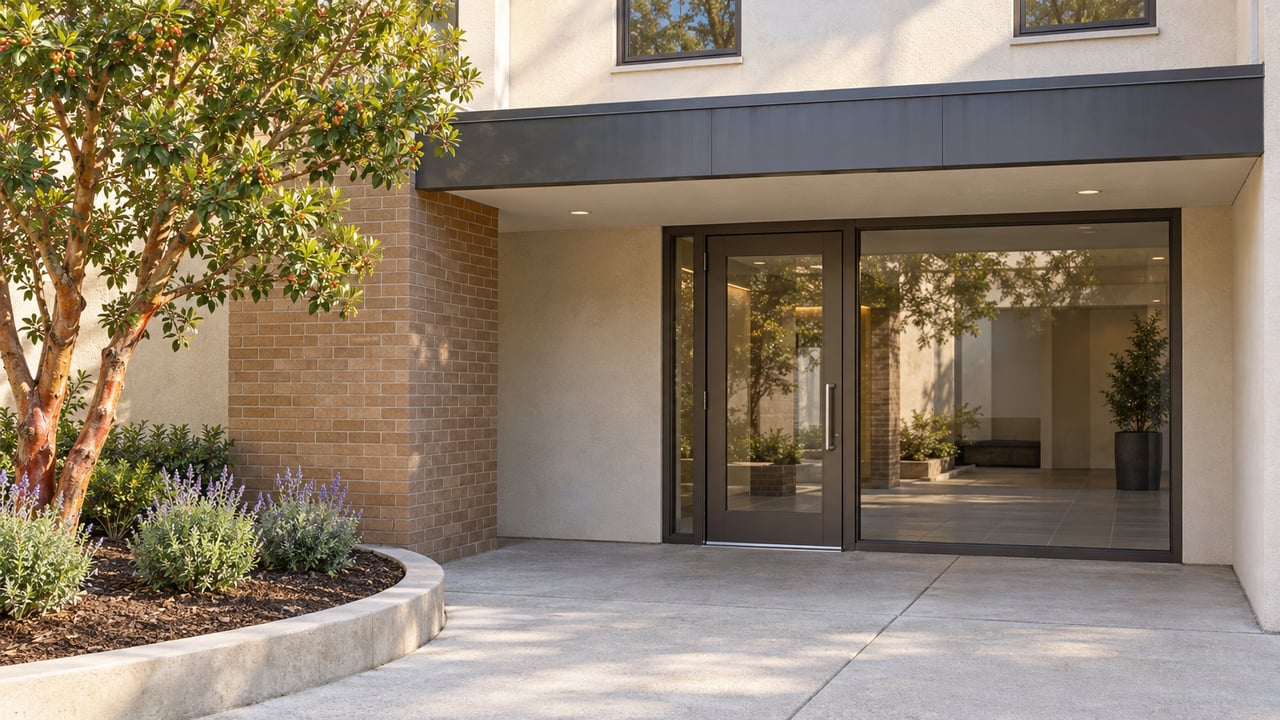
At 10 a.m. on July 21, 2026, the California Attorney General held a public meeting inside St. Elizabeth Care Center at 10425 Magnolia Boulevard in North Hollywood. The subject was the sale of the 52-bed building. The meeting notice was published in Arabic, Cambodian, Cantonese, Farsi, Korean, Mandarin, Russian, Spanish, Tagalog, Vietnamese and Western Armenian as well as English. Two independent health care impact statements were posted for public comment, and written comments were due July 26. By then the buyer had already been running the facility for more than a year.
In the St. Elizabeth sale, the Attorney General's conditional consent sets operating terms for the facility for up to ten years after closing.
The deal record, start to finish
Providence Health System–Southern California ran a competitive bid process for St. Elizabeth and several facilities outside California, then picked affiliates of The Ensign Group. Toluca Way Health Holdings is buying the assets and West Star Healthcare is taking over operations. Ensign is publicly traded and for-profit. St. Elizabeth has served North Hollywood since 1964.
| Date | Event |
|---|---|
| December 16, 2024 | Asset Purchase and Sale Agreement and Operations Transfer Agreement signed |
| April 23, 2025 | Interim Management Agreement between Providence and West Star |
| June 1, 2025 | Ensign begins operating the facility after CDPH approval; side letter to the purchase agreement signed |
| July 7, 2025 | Notice to the Attorney General, which projected closing in Q3 2025 |
| Q1 2026 report | Providence moves the expected closing to the first half of 2026 |
| July 10, 2026 | Two health care impact statements issued |
| July 21, 2026 | Public meeting at the facility |
| September 1, 2026 | Supplemental impact statement |
| October 2, 2026 | Attorney General conditionally consents |
Under Corporations Code §5915, the Attorney General decides within 90 days of receiving written notice and can extend once by 45 days. Some summaries online still say 60 days, because they rely on an older regulation PDF that predates the statute's 2018 amendment. At St. Elizabeth, almost 22 months passed between signing and consent.
The conditional consent also requires the parties to report the closing date to the Attorney General within five days of closing. Closing comes after consent and is still its own event.
A lease that pulls one way and conditions that pull the other
The conditions make more sense once you read the impact statements. David J. Farrell of Farrell Consulting Services wrote one of them. He found that the facility lost more than $12.5 million in total from 2019 through 2024. He also reported that Ensign had invested in the physical plant and raised RN staffing since taking over, and that stakeholders he interviewed expressed gratitude for the changes.
He then pointed to the incentive that shapes the rest of the deal. In May 2026, Medicare and Medicare Advantage residents filled 73% of occupancy. If the sale goes through, St. Elizabeth will pay a new triple-net lease of $725,616 a year. In his health care impact statement, Farrell wrote that this lease "places additional pressure on the St. Elizabeth management team to prioritize short-term residents with the highest daily reimbursement rates," and expected Medi-Cal access to shrink. Across 52 licensed beds, the rent works out to roughly $13,950 per bed per year.
Christopher Whaley, a Brown University health economist, wrote the second statement. He found the acquisition unlikely to substantially reduce local competition or raise prices right away. His concerns were longer-term risks to Medi-Cal access and related-party lease and service payments.
Both reports point to the same trade-off, and the Attorney General's conditional consent takes it on directly.
- Payor mix. For ten years the facility must reserve 40% of its skilled nursing beds for Medi-Cal beneficiaries, with a 10% variance allowed.
- Rent. For ten years, any annual rent increase above 2.5% needs Attorney General approval.
- Related-party cash. For ten years, fees paid to affiliated entities cannot exceed 5% of gross revenues. The facility also cannot take on debt that threatens its financial stability or cuts direct care staffing.
These terms address who fills the beds, how fast rent can grow, and how much cash can go up to affiliates.
Transfer provisions in the St. Elizabeth consent
Under Condition IV, for ten years, any sale or transfer of control of the facility, or of the real property under it, requires 60 days' notice to the Attorney General.
The rest of the package covers staffing and oversight. For ten years, the facility must keep providing the same types and levels of skilled nursing services and stay in Medicare and Medi-Cal. For seven years, the operator must offer continued employment to staff in good standing, employ a full-time administrator who does not serve any other SNF, and maintain a quality advisory committee and a Community Advisory Board. For ten years, an Attorney General-selected monitor oversees compliance, and the operator files annual compliance reports.
Any change to the underlying agreements also goes back to the Attorney General. Material modifications need 90 days' notice and ordinary-course changes need 60. The purchase agreement, the side letter and the interim management agreement are all attached to the consent as exhibits.
The CDPH track in the St. Elizabeth sale
The St. Elizabeth operations transfer agreement includes a joint communication plan for residents, families and employees. It keeps seller information confidential until closing, with exceptions for legally required disclosure.
St. Elizabeth used the interim management route. CDPH approved the management arrangement, and Ensign took over operations on June 1, 2025, well before the Attorney General acted. As a result, the operating record the impact statement reviewers studied in 2026 was partly the buyer's own.
This post is general information drawn from the public record. It is not legal, tax or financial advice, so boards and buyers should have qualified counsel confirm how these rules and any deal structure apply to their own transaction.
Vincent Viverito and the Senior Living Investment Brokerage team help nonprofit and faith-based sellers in Los Angeles County, using a confidential process and a qualified national buyer pool. Get a Broker's Opinion of Value.